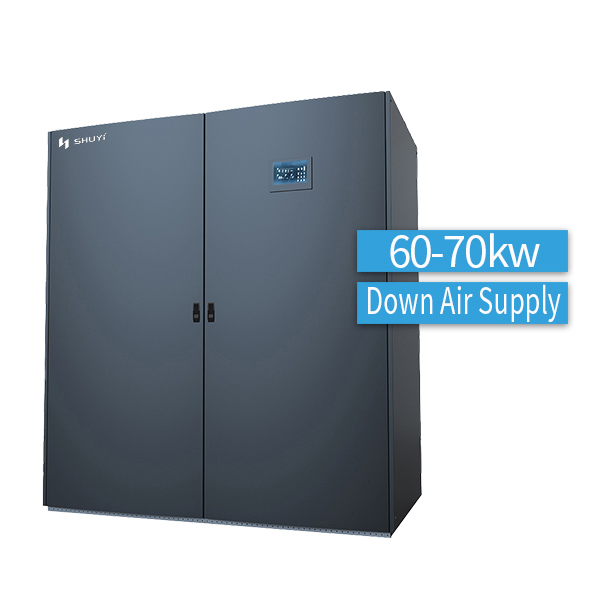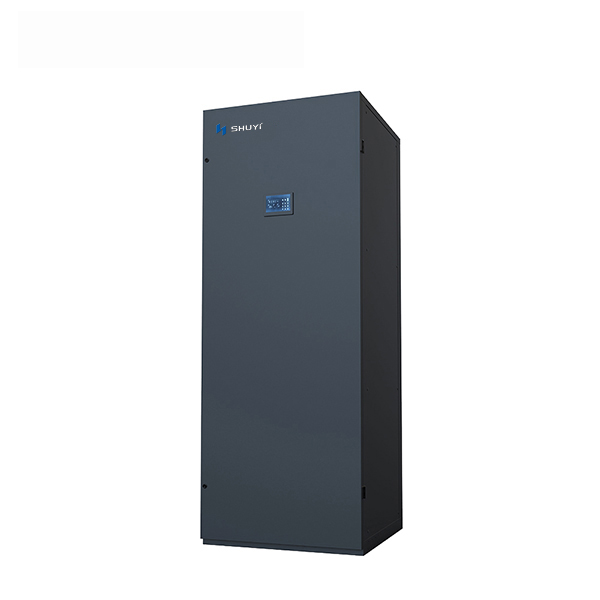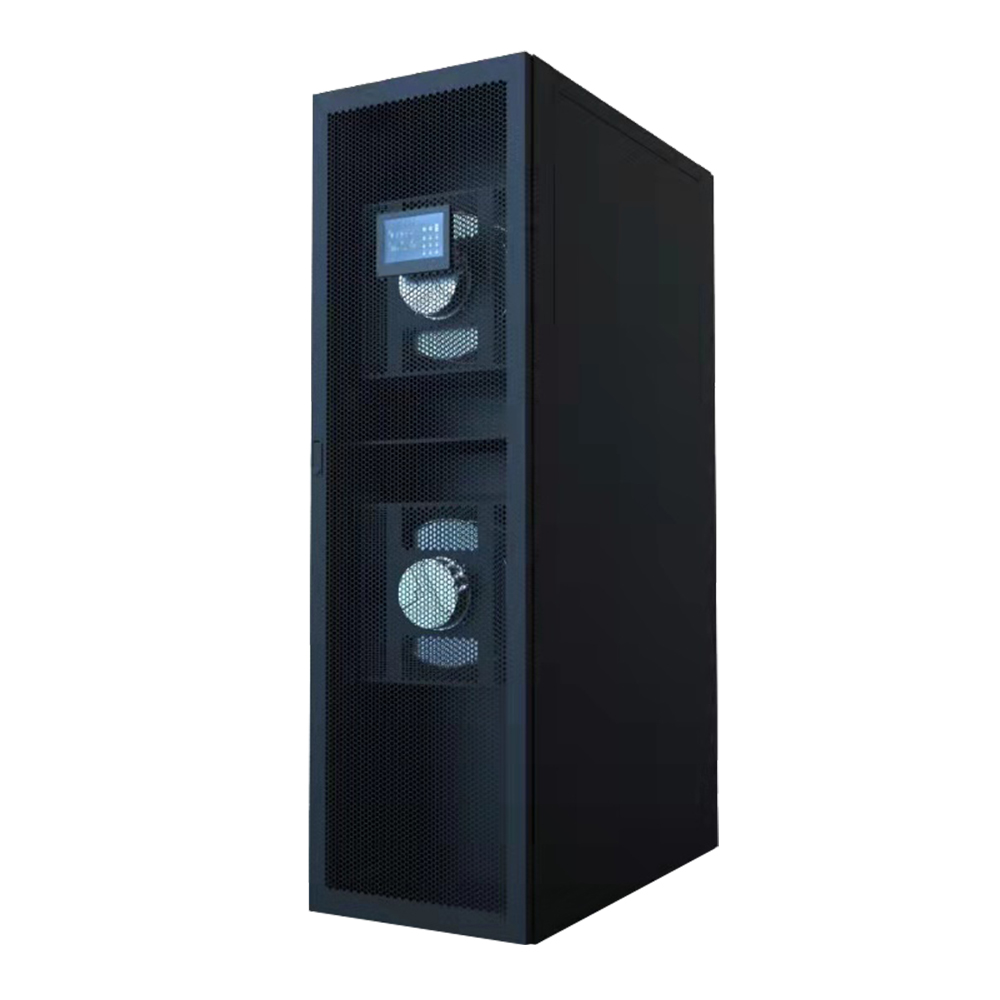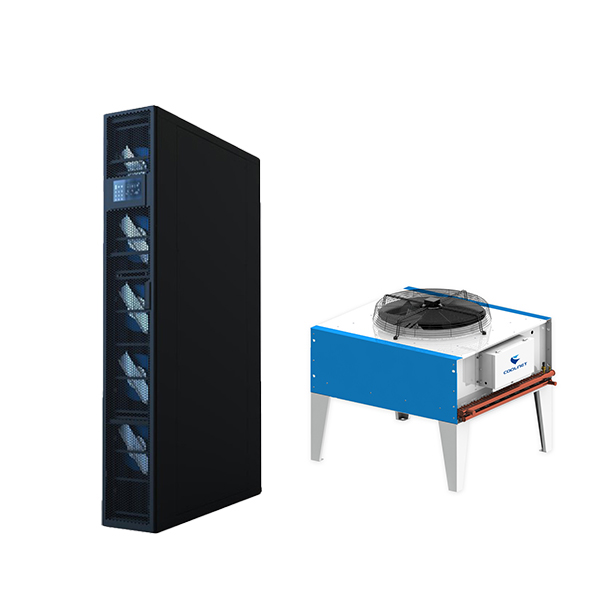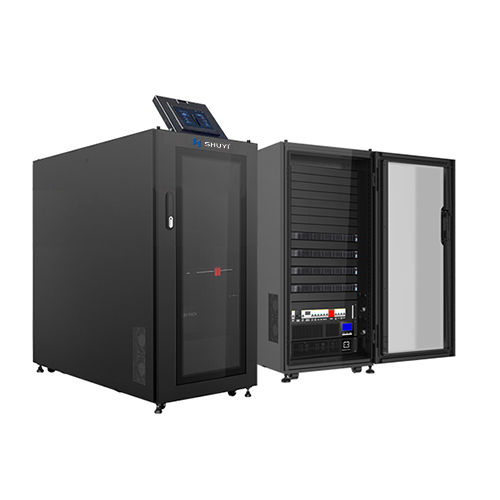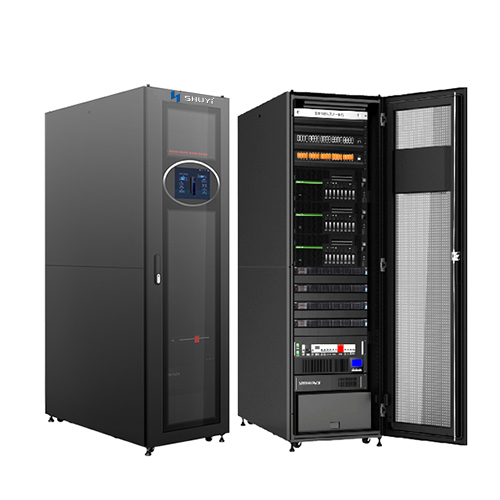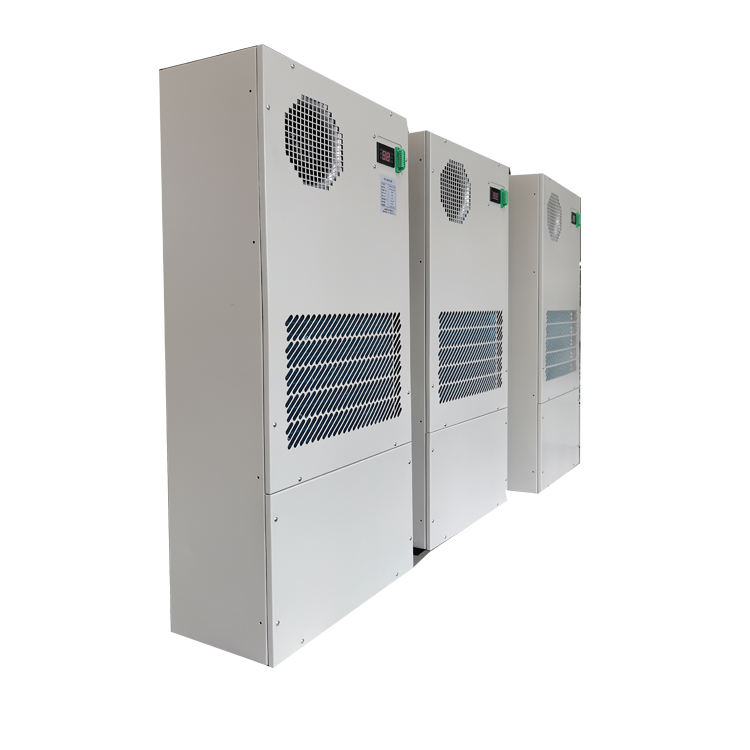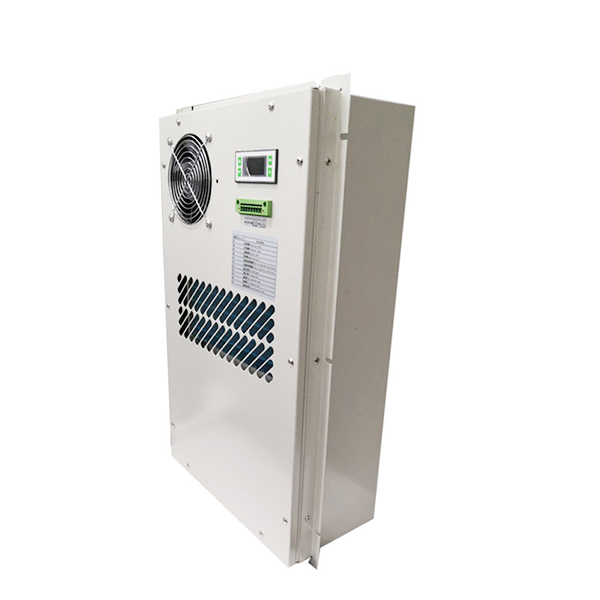
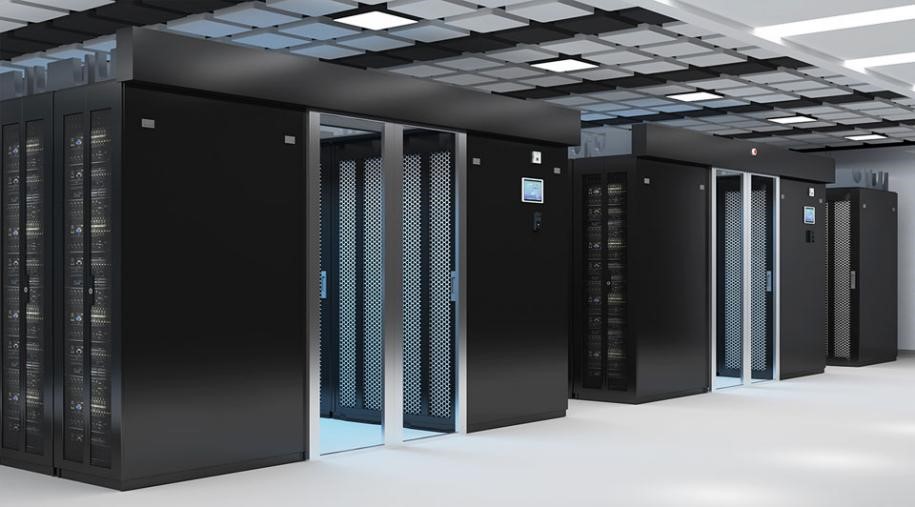
While cooling systems need to work reliably, they should also work as efficiently as possible. IT thermal management systems account for approximately 38% of the total energy consumption in a typical data center. A precision cooling or thermal management system built for reliability and efficiency must be selected. Some features to look for include: Variable capacity fan and compressor. Components that can be adjusted to the actual conditions of the room to provide only the cooling and airflow required are key to controlling energy usage and spending to ensure sustainability. For example, variable speed fan technology can automatically adjust up or down 25-100% depending on the system. By matching airflow output to the load requirements in the space, rather than operating at peak load 100% of the time, these fans can reduce fan energy consumption by up to 76%. Dual compressors and power redundancy. Precision air conditioning or thermal management systems should be designed to provide 24/7 operation and prevent potential component failure. Look for built-in redundancy for critical components. Connecting network elements together as a team can also help ensure 100% availability of equipment. economic system. An optional economizer system allows the cooling unit to utilize cooler outside air temperatures to help meet indoor cooling requirements. For example, pumped refrigerant economizers can be used in air-cooled systems, and small pumps can circulate cold refrigerant when the outside ambient temperature is low enough. Energy savings is also an option in water-cooled and glycol-cooled direct expansion systems when the temperature of the water or glycol drops due to the lower ambient temperature outside. Regardless of system type, energy savings reduces the amount of necessary mechanical cooling or cooling, resulting in a significant reduction in energy consumption. Optional humidifier . To avoid electrostatic discharges that can damage servers or increase cooling capacity when using evaporative cooling systems, humidifiers can add the required moisture to a data center or IT space. High efficiency air filtration . This promotes clean air in the space and prevents dust and debris from affecting the performance of sensitive IT equipment.
Read More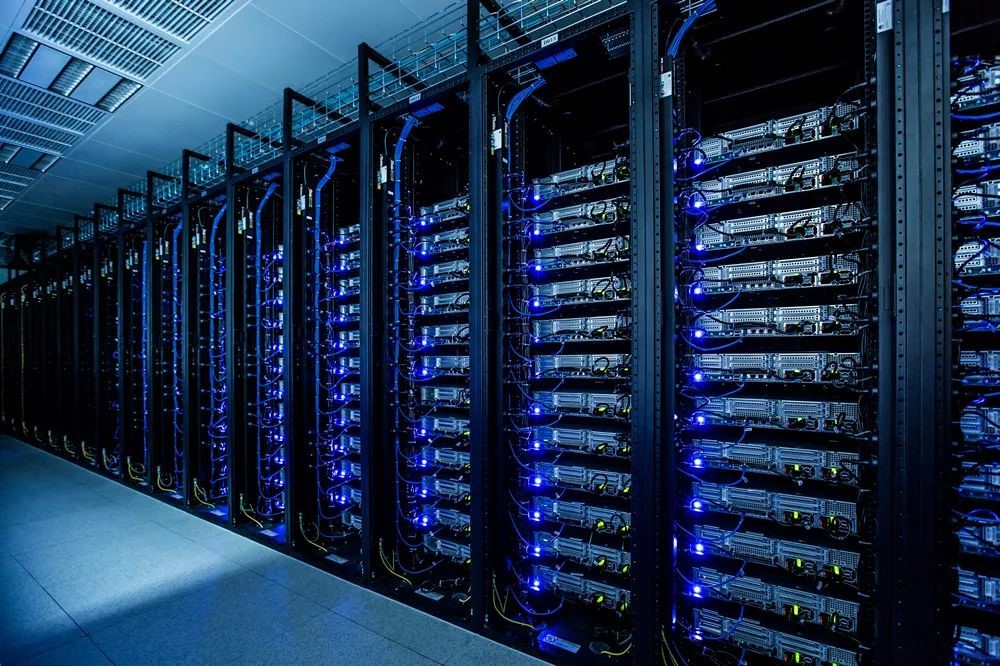
Global warming and a heat wave! On July 19, Google and Oracle's servers went down due to hot weather, causing some websites and services to go down. Google said one of its data centers in the United Kingdom experienced a cooling system failure due to the hot weather. This caused some servers to stop working. Several cloud services in Europe experienced high error rates, delays or were inaccessible. Google shut down some machines to prevent further damage. The extreme heat also caused Oracle's data centers to go down. The company said that while shutting down some of its equipment would result in customers not being able to access some cloud infrastructure services, it had to do so to prevent increased system failures. Oracle is working to fix its cooling system. While it is not clear how many users were affected by the outage, it is bound to take a toll on users who use Oracle and Google Cloud Services to host their sites. During the hot summer months, data centers are prone to failure. High temperatures lead to a significant increase in the chance of server replacement parts. The temperature of the server room is generally controlled at 20°C-26°C. Once the temperature of the server room is too high, it will lead to equipment downtime, even data loss, component and storage media damage. The continuous high temperature will overload the cooling equipment and overheat its own system, which will easily cause the cooling equipment to fail, thus causing the whole data center to be paralyzed. High temperatures also make the air in the server room dry, which generates static electricity and poses a fire hazard. In addition, dust can also cause high temperature inside the equipment of the server room, which cannot dissipate heat in time. Therefore, regular dust removal and maintenance of the server room is needed to eliminate safety hazards. All these add to the operation and maintenance cost of the data center. High temperature weather can also be a test for power supply systems. High loads can lead to sudden power outages and even damage to server hard drives. the life of the UPS battery has a lot to do with the ambient temperature, and every 1°C rise in the operating temperature significantly reduces its life. If too much dust accumulates, it may also cause a short circuit in the battery. high UPS chassis temperatures may explode and cause a fire in the server room. In the context of global warming, data centers are facing increasing challenges of extreme weather. To reduce the impact of hot weather, the industry continues to explore. One of the most disruptive solutions is to build data centers under the sea. The average PUE of the national data center in FY2021 is 1.49. The NDRC and the Ministry of Industry and Information Technology require new data centers to have a PUE of 1.3 or less. And the PUE of single cabin of submarine data center is only 1.076, which has a broad application prospect.
Read More
After the full launch and orderly implementation of "East Data and West Computing", data centers have entered a new era of development, and a series of R&D and practices have been carried out by relevant entities around high technology, high computing power, high energy efficiency and high security. Among them, the exploration for energy storage system can be said to be of great concern. This stems from the various benefits that energy storage systems can bring. In theory, a perfect energy storage system can carry out effective peak shaving and valley filling. By storing energy, the energy storage system can supply power during the peak of electricity price and store energy during the trough of electricity price, which can reduce the investment of electricity and help data center save cost. At the same time, energy storage systems can also drive energy and carbon reduction in data centers. So, what should data centers pay attention to during the development of energy storage systems? First, the cost of application, technological developments and implementation conditions are crucial. The cost is for commercial consideration, the market environment, the cost and benefit must be balanced in order for the enterprise to achieve development, which is also the basis for the adoption of energy storage system. The requirements of technology development and implementation conditions are based on the basic responsibilities of energy storage systems. The most basic purpose of energy storage is to carry out energy use and ensure the smooth operation of data centers. This requires that energy storage technology is not only advanced, but more importantly, mature and has the conditions for implementation. If the emerging energy storage technology or solution cannot guarantee stable power supply, Chai Fa is instead a better choice. Secondly, the energy storage system is a part of the data center, and its construction will affect the layout of the whole data center. This impact can be divided into two aspects, one is the impact from the construction itself, the data center is a whole, any change in one of the links will affect the overall pattern. For example, BIPV (Building Integrated Photovoltaic), which uses the surface of the building to absorb solar energy, has the advantage of making full use of space, but the impact on building load bearing, construction difficulty and design cannot be ignored. The second is the impact on operation and maintenance. The industry of data center is characterized by long-cycle operation, and once built, the operation cycle is as long as 20 to 30 years. The added or improved energy storage system requires long-term management, which increases the difficulty of operation and maintenance, and even requires the training of professional technicians to be responsible for it, increasing the cost of the data center. In addition, there is a topic that cannot be bypassed in the R&D and practice of energy storage system, which is the physical carrier of energy storage - battery. At present, there are two main types of battery applications in data centers: lithium batteries and lead-acid batteries. Among them, lithium batteries are widely favored. In terms of service life, energy density and space saving, lithium batteries are generally better than lead-acid batteries. However, lithium batteries also have defects at present, mainly in safety performance, and data centers precisely require high safety, which also makes data centers have greater doubts when choosing lithium batteries. Lead-acid batteries with mature technology and high safety are currently the mainstream batteries for data center applications, but most lead-acid batteries cannot be compared with lithium batteries in terms of battery capacity and service life, etc. However, lead-acid batteries currently also have technical breakthroughs. Such as OPzV solid-state batteries, Rui Da International Group deputy general manager and chief engineer Liu Zhaoyong said, compared to lithium batteries, OPzV solid-state lead batteries are safer and can reach more than 98% in terms of recyclability, and are currently performing better in terms of cost and acceptance. From a comprehensive point of view, in the context of the "East is West" and under the requirement of green low-carbon development, the development of data center energy storage is an inevitable trend, but it is still in the exploration stage, and there is more room for optimization in terms of technology and solutions.
Read More
360-degree capture of athletes' movements, invisible fouls under ultra-high-speed cameras, bullet-like special effects, 4K and even 8K ultra-high-definition images... With the support of digital technology, the Beijing Winter Olympics will be enjoyed by more than 2 billion people around the world an audio-visual feast. A series of digital technologies have shown that the total amount of data in China is constantly rising. According to the forecast of the International Data Center (IDC), by 2025, China will generate about 27% of the world's data, with nearly 48ZB (about 10 trillion bytes). The huge amount of data promotes the continuous growth of China's GDP, but also poses new challenges to the development of China's data centers and the improvement of computing power. Based on this, this year's government work report proposed the implementation of the ‘East-to-West Computing’project. The implementation of the ‘East-to-West Computing’ project can promote the balance of supply and demand of data centers, rational layout, green and intensive between developed cities and developing cities in China. Adequate clean energy security and low-cost electricity price support, relatively low land supply costs and cool climate in the western region are the basis for the development of data centers in the western region and reliving the huge demand for computing power in the east, which will improve the country’s overall computing power level, promote green development, expand effective investment, and promote coordinated regional development. At the same time, promoting the development of China's digital economy, unleashing the potential of data elements, better empowering economic development and enriching people's lives have become the main issues that the government should be currently dealing with. How to release the potential of data, give full play to the potential of data and make it the biggest driving force for the development of the national economy? This is obviously inseparable from a strong computing power system as a support. Efficiently increasing computing power, efficient cooling of the data center becomes the key! One of the concepts of the ‘East-to-West Computing’ project is to reduce the energy consumption of the cooling system. The cooling scheme under different climates is an important basis for the ‘East-to-West Computing’, and the cooling industry related to data centers will also face to a new opportunity. As one of the leading companies in cooling systems, SHUYI has launched three types of precision air conditioners which are Cool-smart, Cool-row and CyberMaster, for different types of computer rooms according to the different needs of the regional hub data centers for PUE. They can help data center equipment cool more efficiently, ensure the smooth operation of equipment, reduce enterprise energy consumption, and promote the green and intensive development of enterprises.
Read More
Data is the lifeblood of today’s global digital economy, powering a wide range of industrial activities, from retail and manufacturing to infrastructure and transportation, and data centers are the backbone of this influx of data. As the proliferation of data in our digital world accelerates at an alarming rate, more than 175ZB of data is expected to be generated annually by 2025. As digital transformation is driving data-intensive applications such as IoT and cloud computing, the role of the data center is also expanding, becoming an important intersection of personal, business and economic data. As part of an ever-growing business in the modern world, data centers impact many aspects of how a business operates, including data backup and recovery, networking, website hosting, email management and security, powering the cloud to store applications and e-commerce transactions. To meet global demand, hyperscale providers have been building data centers and expanding their fleets over the past few years. However, the complexities of operating and maintaining these facilities are creating an unprecedented set of challenges that must be met with new approaches. The world has changed significantly and the way we do business has changed. This change will continue to accelerate. Industrial organizations in all industries are producing and using large amounts of data and therefore need data centers to run their businesses. In the face of the coronavirus pandemic, increased remote work and virtual collaboration ensured that demand for data centers remains strong. Hyperscale suppliers in particular will continue to press ahead with their expansion plans, and we haven't seen a negative impact on this market so far. However, there is a growing need for remote monitoring and management of data centers across a wide area or even a global geographic area. As the global recession forces organizations to re-evaluate their offerings and right-size their operations, we will see more companies move their workloads to the data center. In today's rapidly changing environment, a data center is more than a safe and secure facility with reliable power and networking; it is a valuable addition to many organizations' infrastructures, a reliable extension of IT teams, and an integral element of success. The COVID-19 pandemic has paved the way for digital transformation, as businesses transform how they operate and reinvent themselves to deal with new social distancing measures, restricted movement and supply disruptions. As the post-pandemic reality sets in, the "new normal" will see a new digital age rapidly approaching. Digital capabilities will increasingly be a barometer of economic resilience, and the industries that can thrive in the wake of the Covid-19 crisis are those that can fully digitize. The hospitality industry, for example, is really suffering because it's only partially digitized, which is why dine-in restaurants are empty, but online delivery services are booming. In fact, those industries that are able to remain fully online will finally realize the significant benefits of digitization once the lockdown ends. Cloud computing is also changing the design and deployment of data centers, and while cloud solutions are often delivered over the Internet by third parties, it is now increasingly common to see this model applied within an organization's data center as a private cloud. While industry research indicates a major shift in mindset towards the cloud, the traditional data center model and the cloud are not mutually exclusive. Data center transformation will continue to evolve, and CIOs now see cloud not as an “or” but an “and” compared to traditional data center colocation. The shift to a new computing environment has undoubtedly added complexity, which has wide-ranging implications for how IT managers protect data from malicious attacks or compromises. This is why integrating security into data center designs is critical. As the world economy becomes increasingly reliant on digital infrastructure, meeting the highest standards of governance for these critical assets is both a social and a commercial obligation. Security in particular presents evolving challenges, given that successful business continuity depends on a secure environment. The pandemic has reinforced the importance of data centers and cloud computing to society. In the early days of the crisis, the data center industry was the backbone of the global economy, supporting a massive shift to online services. The pandemic is a watershed event for the world and a defining moment for data centers and the cloud. For many organizations, digital transformation expected to take years has been compressed into days and weeks. Entire industries are being reset, and digital infrastructure is front and center of transformation. The data center industry must quickly adapt to complex new realities. Demand for cloud services will skyrocket in some areas, but shrink in other verticals. As the data market grows exponentially, the intersection of vision and the right technology will be required to create a global digital infrastructure to drive growth in the years ahead.
Read More
 IPv6 network supported

 English
 français
 español